You know the moment. It’s late May, you reach for the moisturizer that got you through winter, and somewhere between application and lunch, your face has gone from “hydrated” to “I could fry an egg on this.” Your instinct is to fight back — strip everything down, or pile on more product to control the shine. Both make it worse. The fix isn’t doing more or less. It’s knowing exactly what to swap, and when.
(This post contains affiliate links — we may earn a commission if you buy through them, at no extra cost to you.)
Here’s what’s actually happening under your skin during the seasonal shift, why the products that worked in March are sabotaging you in June, and the four changes that fix it — without throwing out a routine you spent months getting right.
Key Takeaway
Rising heat and humidity change how your skin behaves — the fix is swapping specific products, not stripping your routine down or piling on more to fight the shine.
Your Skin Isn’t Broken. It’s Just Confused.
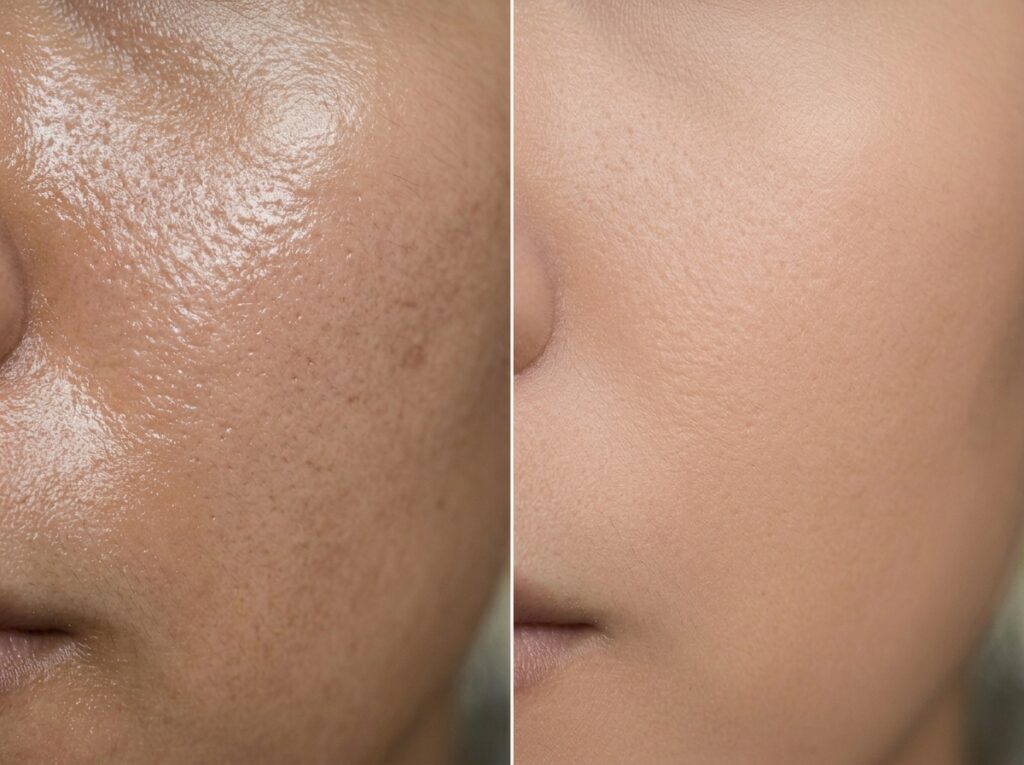
Skin behaves differently as temperature and humidity rise. Sebaceous (oil) glands respond directly to heat, producing more sebum even if your skin type hasn’t changed. At the same time, sweat mixes with sunscreen, makeup, and oil to clog pores faster than in cooler months. This is why people who never broke out in winter suddenly see breakouts along the hairline, jaw, and back in summer — it’s not “bad skin,” it’s an unmatched routine.
The goal isn’t fewer products. It’s lighter textures, earlier sun protection, and ingredients that control oil without disrupting your skin barrier.
Step 1: Stop Smothering Your Face
If your winter moisturizer contains shea butter, heavy oils, or ceramides in a thick cream base, it’s likely too occlusive for summer heat. Look for water-based gel moisturizers with hyaluronic acid as the primary hydrator — it holds water in the skin without sealing in heat and sweat the way thick creams do.
A lightweight, oil-free gel moisturizer is one of the few products worth upgrading every season. [LINK: lightweight gel moisturizer] is a solid, fragrance-free option that layers well under sunscreen without pilling.
How to tell if your moisturizer is too heavy for summer: if your skin feels greasy within 20 minutes of applying, or makeup slides off your T-zone by midday, that’s your moisturizer working against the season, not with it.
Step 2: The SPF Mistake Almost Everyone Makes
This is the step most people get wrong, not by skipping sunscreen, but by using the wrong one. Chemical sunscreens (avobenzone, octinoxate) can feel heavier and more likely to sting when mixed with sweat. Mineral sunscreens using zinc oxide sit on top of skin rather than absorbing into it, making them more sweat-resistant and less likely to irritate already oil-prone summer skin.
[LINK: mineral sunscreen spf 50] is a good starting point if you’ve never used a mineral formula before — it tends to leave less of a white cast than older mineral sunscreens did.
Reapplication matters more in summer than people think — sweat and swimming remove SPF far faster than dry winter air. Set a 2-hour reapplication reminder if you’re outside for extended periods.

Step 3: The Counterintuitive Fix for Oily Summer Skin
Counterintuitively, this is the season to introduce a mild chemical exfoliant if you don’t already use one — not to over-strip skin, but because higher oil production means dead skin cells clear more slowly, leading to clogged pores and dullness. A 2-3x weekly salicylic acid treatment (BHA) is specifically suited to oilier summer skin because it’s oil-soluble and can get into pores that water-soluble acids can’t reach.
Start at 2x per week regardless of your skin type in summer — more isn’t better here, and over-exfoliation in heat increases sun sensitivity.
Step 4: The Body Care Step Everyone Forgets
Body breakouts (back, chest, shoulders) spike in summer from sweat, tighter clothing, and sunscreen buildup. A salicylic acid body wash used in the shower — left on for 30-60 seconds before rinsing — addresses this directly, rather than switching your face routine and ignoring the rest of your skin.
A Simple Summer Routine That Actually Works
Morning: Gentle cleanser → hyaluronic acid serum → lightweight gel moisturizer → mineral SPF Evening: Cleanser → BHA exfoliant (2-3x/week only) → gel moisturizer Shower: Salicylic acid body wash on areas prone to breakouts
This isn’t a 10-step routine. It’s four reliable steps used consistently, which outperforms a complicated routine used inconsistently every time.
Common Mistakes People Make During the Transition
- Switching everything at once — change one product at a time so you can tell what’s actually causing irritation if something doesn’t agree with your skin
- Assuming oilier skin means skipping moisturizer — under-moisturized skin often produces more oil to compensate, making the problem worse
- Using last year’s sunscreen — most sunscreen formulas degrade after 12 months once opened; if it’s been sitting in a drawer since last summer, replace it
Frequently Asked Questions
Do I really need to change my skincare routine every season? Not entirely — cleansers and active ingredients like retinol or vitamin C usually don’t need to change. It’s primarily moisturizer texture and SPF type that benefit from a seasonal swap, since those are most affected by heat and humidity.
Is it normal for my skin to get oilier in summer even if I have dry skin? Yes. Heat increases sebum production somewhat independent of your baseline skin type, which is why even normally dry skin can feel oilier in the T-zone during summer months.
Can I use the same sunscreen for my face and body? You can, but facial skin is generally more sensitive and prone to breakouts, so a dedicated facial sunscreen (often labeled non-comedogenic) tends to perform better on the face specifically.
The One Thing to Remember
Summer skin issues aren’t a sign you’re doing something wrong — they’re a sign your routine hasn’t caught up to the season yet. Swap the texture, never skip reapplication, and the rest sorts itself out. Your skin isn’t fighting you. It’s just waiting for you to give it what it actually needs right now.
Looking for the season-by-season ingredient swaps in more detail? See our full guide on Skin Concerns & Ingredient Guides for what to use when your skin changes.
Related reading: If summer humidity is making your skin oilier than usual, our oily skin guide can help you adjust. And if heat is making fragranced products feel more irritating than usual, see fragrance-free vs. unscented.