Key Takeaway
Over-cleansing and stripping oily skin often backfires — skin overcompensates with more oil. Gentle cleansing plus real moisturizer usually reduces shine more than harsh products.
Oily Skin: Why Your Routine Might Be Making It Worse
By 2 PM your face looks like you just finished a workout you never did. You blot, you powder, an hour later it’s back — shiny forehead, slick nose, makeup sliding off your cheeks like it never set. If you’ve spent years treating oily skin like the enemy, stripping it with harsh cleansers and skipping moisturizer entirely, here’s the part nobody tells you: that’s probably why it’s still oily.
This post contains affiliate links. If you purchase through them, we may earn a small commission at no extra cost to you.
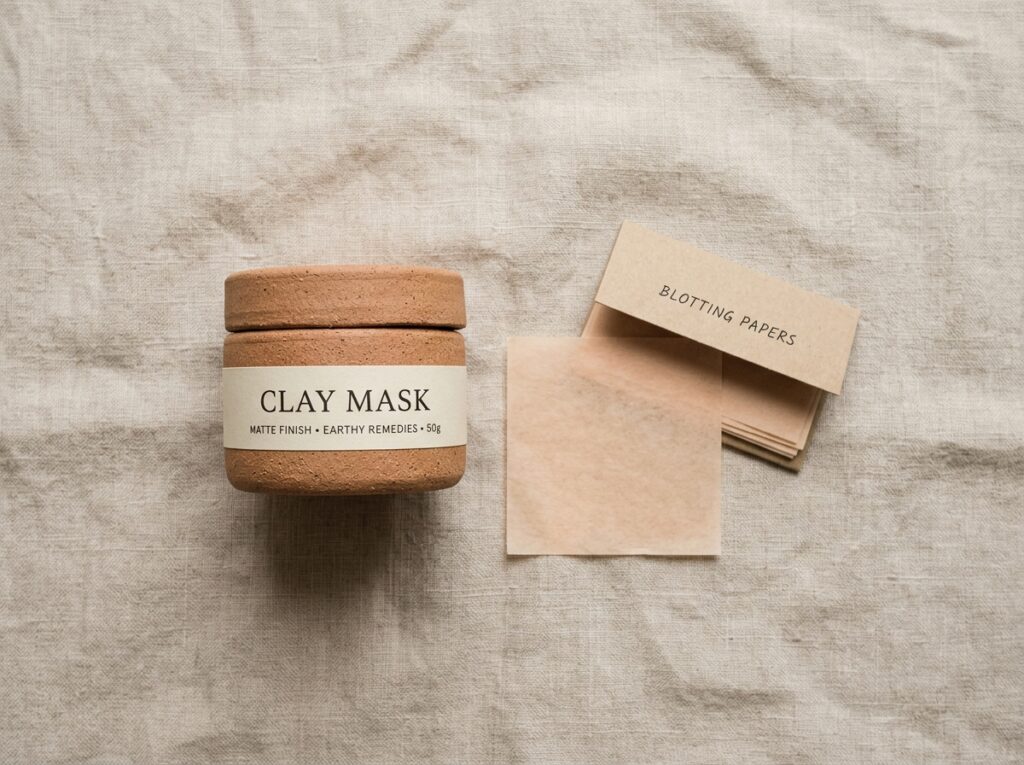
Matte clay-textured skincare jar next to a small blotting paper sheet, soft neutral background, minimalist flat lay
Why Your Skin Won’t Stop Producing Oil
Sebum (the oil your skin makes) isn’t a malfunction — it’s your skin’s natural barrier protection, and it’s largely controlled by genetics and hormones. But a few things make it worse:
- Over-cleansing or over-stripping — when you remove too much oil too aggressively, skin reads that as “produce more, fast.” This is the single most common mistake we see.
- Skipping moisturizer — same logic. Dehydrated skin often overproduces oil to compensate.
- Hot water and harsh scrubs — strip the barrier further, triggering the same overproduction cycle.
- Hormonal fluctuations — cycle-related, stress-related, or seasonal changes in oil production are normal, not a sign you’re doing something wrong.
The goal isn’t to eliminate oil. It’s to balance it.
A Routine That Actually Balances Oily Skin
Step 1 — Gentle, non-stripping cleanser
Look for gel or foam cleansers labeled “balancing” or “gentle,” not “deep clean” or “purifying” — those words usually signal harsh sulfates that overstrip. Cleanse twice a day max; more than that backfires.
Step 2 — Niacinamide serum
This is the single most useful ingredient for oily, congestion-prone skin. It visibly regulates oil production over consistent use and calms redness at the same time. A 5-10% concentration is the sweet spot — higher isn’t better here.
Step 3 — Lightweight, oil-free moisturizer
Yes, even if your skin is oily — especially if your skin is oily. Skip this and you risk triggering more oil production to compensate. Gel-based or “oil-free” labeled moisturizers absorb fast without adding shine.
Step 4 — SPF, non-negotiable
Oily skin still needs daily sunscreen. Choose a “matte finish” or gel-based SPF formula so it doesn’t sit heavy or add extra shine on top of your natural oil.
What to Add 2-3x a Week
Salicylic acid (BHA) — oil-soluble, meaning it actually gets into pores and breaks up the gunk that causes blackheads and that dull, congested look. This is the ingredient most worth investing in if you only add one active.
Clay masks — genuinely useful for absorbing excess surface oil before a big day or event, but not meant for daily use — overuse dries skin out and triggers the rebound cycle again.
Common Mistakes Making It Worse
- Washing your face more than twice a day “just to feel clean”
- Using alcohol-based toners that feel “tingly” — that’s irritation, not progress
- Skipping moisturizer because skin “already feels oily enough”
- Constantly switching products before giving anything 4-6 weeks to actually work
The Bottom Line
Oily skin isn’t a flaw to fix aggressively — it’s a balance to find patiently. The right approach calms oil production naturally instead of fighting it, and most people see real improvement within 6-8 weeks of switching from stripping to balancing.
Related reading: Want to know if a product’s oil-control claims are real? Learn how to read a skincare ingredient label. And if oiliness comes with breakouts too, The Acne Treatment Hierarchy can help you sequence your routine.