Here’s the trap almost everyone falls into: one bad breakout, and you reach for the strongest thing on the shelf. Within a week your skin is red, peeling, and somehow breaking out more — so you switch again, and the cycle repeats. The products aren’t the problem. The order is.
(This post contains affiliate links — we may earn a commission if you buy through them, at no extra cost to you.)
There’s an actual sequence that works — start gentle, escalate only when needed, and give each step real time before judging it.
Key Takeaway
Start gentle and escalate only when needed — using the strongest treatment first usually causes more irritation, not faster results. Give each step real time before judging it.
Why Strength Isn’t the Same as Speed
Acne treatments work by either killing acne-causing bacteria, unclogging pores, or reducing inflammation. Using the strongest option first doesn’t clear skin faster — it just increases the odds of redness, peeling, and a damaged skin barrier, which often makes acne worse in the following weeks. The hierarchy below exists because each step is the lowest-irritation option that still addresses the problem.
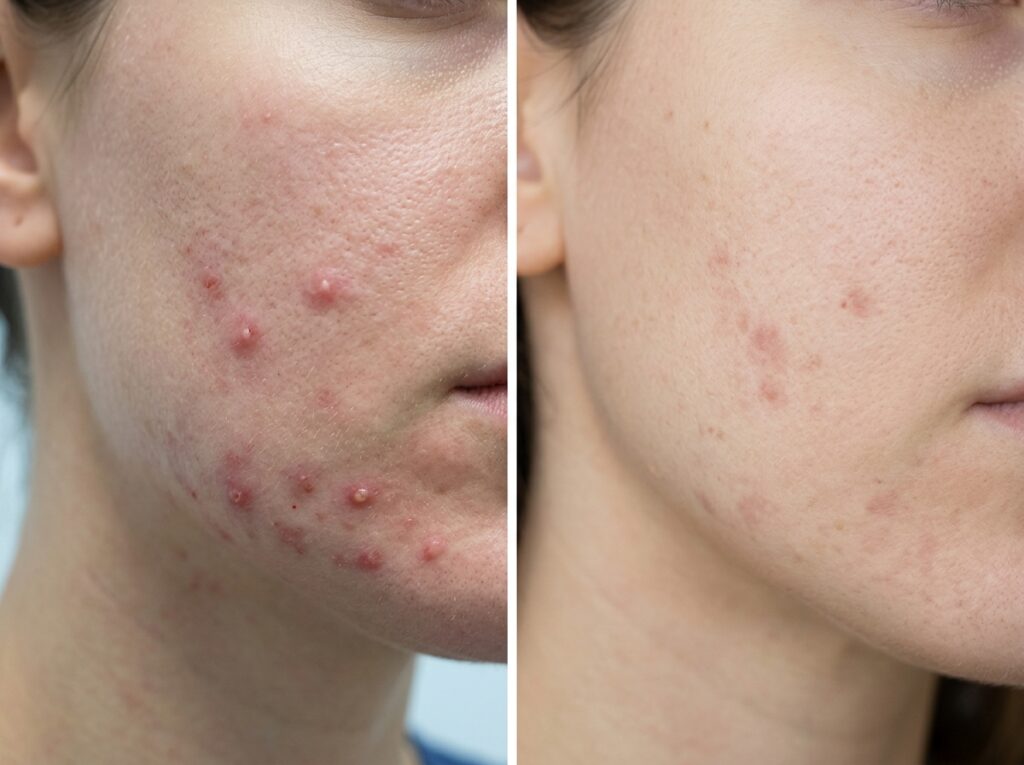
Step 1: Start With Salicylic Acid (BHA)
For mild to moderate breakouts — especially blackheads, whiteheads, and oily-skin congestion — salicylic acid is the right starting point. It’s oil-soluble, meaning it can get inside the pore itself to clear out buildup, rather than just sitting on the surface.
Use a 2% salicylic acid treatment 2-3 times per week to start, not daily. [LINK: salicylic acid treatment] is a well-tolerated option that won’t over-dry skin the way many acne products do.
Give this 4-6 weeks before deciding it’s not working. Acne treatments take a full skin cycle to show real results — judging at week one is the most common reason people switch products too early.
Step 2: Bring in Benzoyl Peroxide for Inflammation
If breakouts are more inflamed — red, raised, sometimes painful — benzoyl peroxide targets the bacteria (C. acnes) directly, which salicylic acid doesn’t do as effectively. It’s stronger and more drying, which is exactly why it’s step two, not step one.
Start with a 2.5% concentration, not 10% — research shows 2.5% is roughly as effective as 10% for most people, with significantly less irritation. Use it on affected areas only, not your whole face, 3-4 times per week initially.
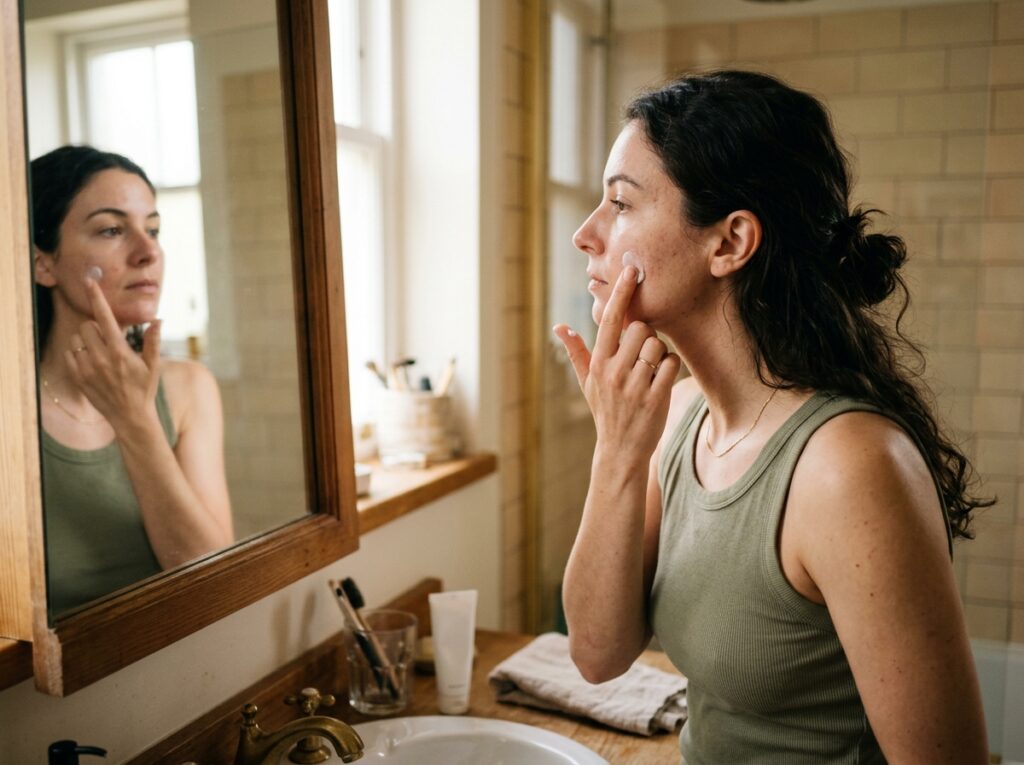
Step 3: Add Retinoids to Stop Future Breakouts Before They Start
Salicylic acid and benzoyl peroxide treat active breakouts. Retinoids (adapalene, the most accessible option) prevent new ones by keeping pores from clogging in the first place. This is why dermatologists often recommend pairing a retinoid with one of the above — one treats what’s there, the other reduces what’s coming.
Start adapalene 2-3 nights per week, never combined with benzoyl peroxide in the same routine (they can deactivate each other) — use them on alternating nights instead.
Step 4: Know When to Stop Self-Treating
If you’ve consistently tried steps 1-3 for 8-12 weeks with no real improvement, or if you have cystic, painful, or scarring acne, this is the point to see a dermatologist rather than continuing to self-treat. Prescription-strength retinoids, oral medications, or hormonal treatments are sometimes genuinely necessary — and trying to power through with stronger over-the-counter products instead usually just causes more irritation without solving the underlying issue.
What NOT to Do
- Don’t combine all three actives (salicylic acid, benzoyl peroxide, retinoid) on the same night — this is the fastest way to a damaged barrier
- Don’t switch products every 1-2 weeks — you’re resetting the clock each time
- Don’t skip moisturizer because your skin is oily — under-moisturized skin often produces more oil to compensate
Frequently Asked Questions
How long before I should expect to see results? Give each step 4-6 weeks minimum before judging it. Skin cycles take about a month, so results genuinely aren’t visible until then — switching earlier just resets the clock.
Can I use all three treatments together to clear up faster? No — combining salicylic acid, benzoyl peroxide, and a retinoid in one routine is the fastest way to damage your skin barrier, which usually causes more breakouts, not fewer.
What if none of these steps are working? If 8-12 weeks of consistent use across steps 1-3 hasn’t helped, that’s a genuine signal to see a dermatologist rather than trying yet another over-the-counter product.
The One Thing to Remember
Acne treatment isn’t about finding one miracle product — it’s about using the right tool for the right type of breakout, in the right order, and giving each step enough time to actually prove itself before moving on.
For a deeper look at whether your specific breakouts are hormone-related, see our guide on [Hormonal Acne].
Related reading: Suspect your breakouts are hormone-related? Hormonal Acne explains the signs to look for. And before adding any new active from this list, it’s worth knowing how to patch test new products first.