Key Takeaway
Retinol “purging” is almost always a sign of starting too fast, not a defective product — ease in slowly (2x/week) and irritation drops dramatically.
Retinol for Beginners: How to Start Without Wrecking Your Skin Barrier
You bought the retinol everyone recommends. Three nights in, your face is flaking like a snake shedding skin, red patches showing up where there weren’t any, and you’re wondering if “retinol purge” is just a nice way of saying “this stuff is hurting you.” Here’s the truth: it’s not the ingredient’s fault — it’s almost always how fast people start.
This post contains affiliate links. If you purchase through them, we may earn a small commission at no extra cost to you.
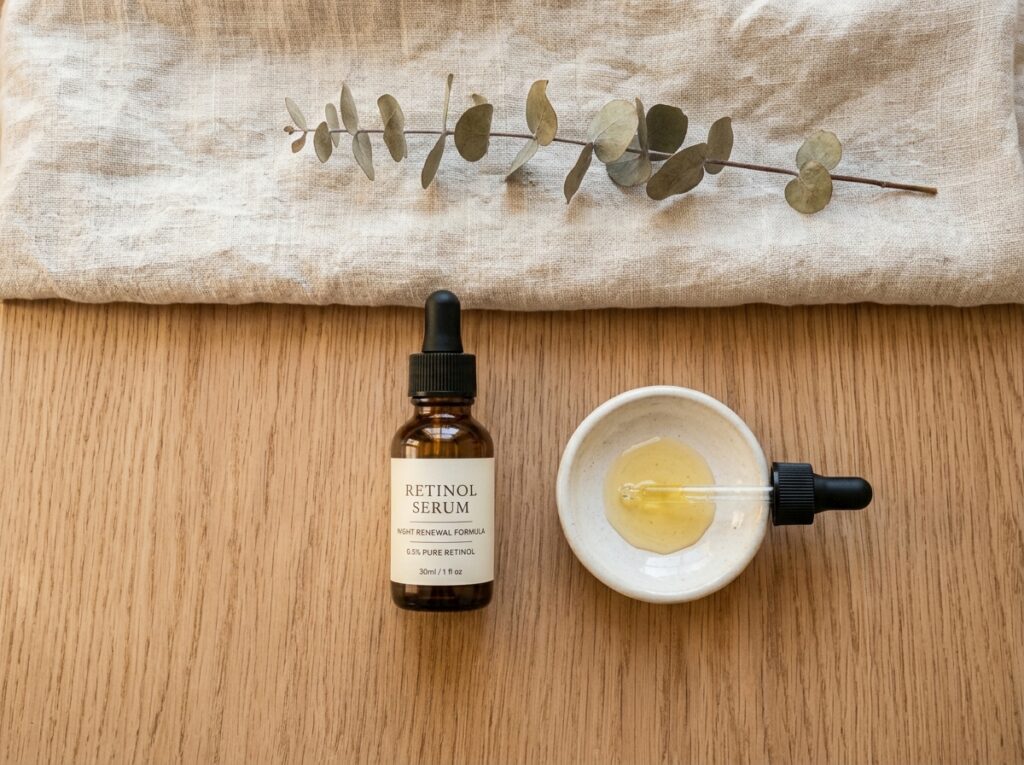
What Retinol Actually Does
Retinol is a vitamin A derivative that speeds up skin cell turnover and stimulates collagen production. Over consistent use, it smooths fine lines, fades dark spots, and improves overall texture — it’s one of the most studied anti-aging ingredients that genuinely delivers, not just marketing hype.
But that cell turnover is exactly why it irritates skin when introduced too fast. You’re essentially asking your skin to renew itself faster than it’s used to, and the barrier needs time to adjust.
The Slow-Start Method That Actually Works
Week 1-2: Apply a pea-sized amount once, every third night. Yes, only every third night — this feels too slow, and that’s the point.
Week 3-4: Move to every other night, if skin isn’t flaking, stinging, or unusually red.
Week 5+: Nightly, if your skin has tolerated the above without issues.
Always apply to fully dry skin — even slightly damp skin increases retinol’s penetration and irritation risk. Wait a full 20-30 minutes after washing your face.

The Sandwich Method for Sensitive Skin
If you’re prone to irritation, try “sandwiching”: moisturizer → retinol → moisturizer again. This buffers the ingredient slightly without canceling its effects, and it’s a genuinely underrated trick most beginner guides skip.
What to Pair It With (and What to Avoid)
Pair with: Niacinamide (calms irritation), hyaluronic acid (replenishes moisture retinol can deplete), and SPF every single morning — retinol increases sun sensitivity significantly.
Avoid combining with: Vitamin C in the same routine (use AM vitamin C, PM retinol instead), and other exfoliating acids on the same night — that’s a fast track to a damaged barrier.
Signs You’re Overdoing It
Persistent redness lasting days (not hours), painful tightness, visible peeling beyond mild flaking, or breakouts that weren’t there before. If you see these, drop back a step — skip a few nights, double up on moisturizer, and reintroduce more slowly.
The Bottom Line
Retinol rewards patience, not intensity. The “go slow” approach isn’t a beginner’s shortcut — it’s literally how dermatologists recommend starting, because skin that adjusts gradually tolerates retinol long-term far better than skin pushed too hard too soon.
Related reading: Not sure if retinol or a gentler option is right for you? Peptides vs. Retinol compares the two. And if your skin is already reacting to too much, start with Skin Barrier Repair.