Key Takeaway
Retinol has stronger research backing but more irritation risk; peptides are gentler with a slower payoff. They’re not rivals — many routines benefit from both, used on different nights.
Peptides vs. Retinol: Which One Does Your Skin Actually Need?
Two ingredients dominate every “best anti-aging serum” list, and they’re often pitted against each other like you have to pick a side. Reality check: this isn’t really a competition — but knowing the difference matters, especially if your skin can’t tolerate one of them well.
This post contains affiliate links. If you purchase through them, we may earn a small commission at no extra cost to you.
What Retinol Does
Retinol speeds up cell turnover and directly stimulates collagen production at a cellular level. It has the strongest, most extensive research backing of almost any anti-aging ingredient — but that potency comes with a tradeoff: irritation, sun sensitivity, and a real adjustment period for most people.
What Peptides Do
Peptides are short chains of amino acids that signal your skin to produce more collagen and elastin — essentially sending a message rather than forcing a process. They’re gentler, with little to no irritation risk, but generally produce slower, more subtle results than retinol.
Side-by-Side Comparison
| Retinol | Peptides | |
|---|---|---|
| Speed of results | Faster, more dramatic | Slower, more subtle |
| Irritation risk | Moderate to high initially | Very low |
| Sun sensitivity | Increases significantly | No meaningful increase |
| Best for | Fine lines, texture, dark spots | Sensitive skin, maintenance, prevention |
| Pregnancy-safe | No | Generally yes (confirm with your doctor) |
Can You Use Both Together?
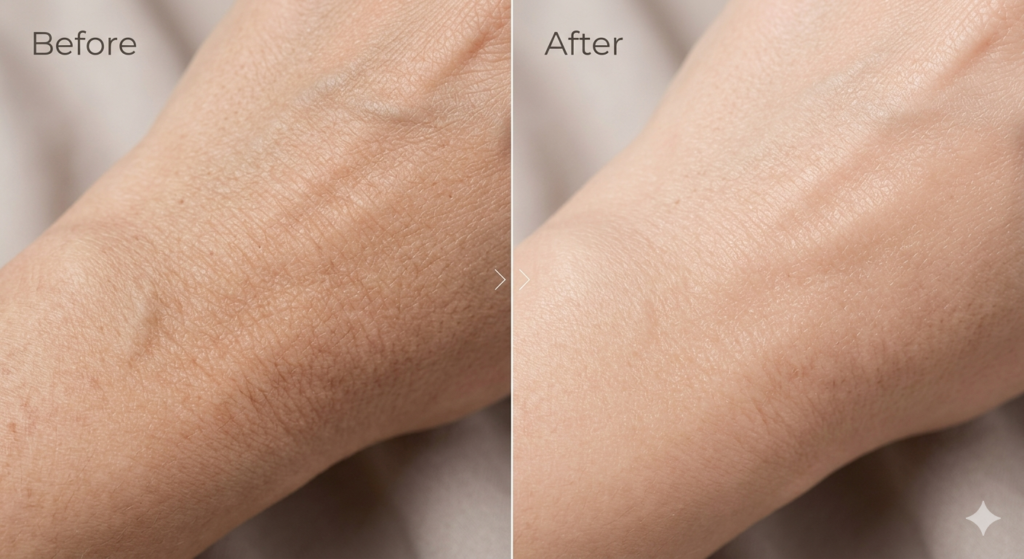
Yes — and for most people, this combination works better than either alone. A common approach: peptide serum in the morning under SPF, retinol at night. They don’t cancel each other out; peptides can actually help support skin while it’s adjusting to retinol.
Which One Should You Actually Start With?
Choose peptides first if: you have sensitive or reactive skin, you’re pregnant or breastfeeding, or you want a gentle entry into anti-aging skincare with minimal risk.
Choose retinol first if: you’re dealing with visible fine lines, uneven texture, or dark spots and want the ingredient with the strongest research behind faster, more noticeable change — and you’re prepared to introduce it slowly.
The Bottom Line
This was never really a rivalry — it’s a partnership with two different speeds. Peptides play the long, gentle game; retinol pushes faster with more intensity. Most well-built anti-aging routines eventually include both, just introduced at the right pace for your skin’s tolerance.
Related reading: Decided retinol is the right move for you? Retinol for Beginners walks through how to start without irritation. Either way, patch testing new products is worth doing first.