As an Amazon Associate we earn from qualifying purchases. This review is independent — see our Affiliate Disclosure.
Quick Answer
This 7% glycolic acid toner is a leave-on AHA exfoliant that smooths texture, fades post-acne marks, and helps prevent clogged pores over time. It’s a lower, more approachable strength than most glycolic peels, making it one of the most repurchased exfoliants on Amazon — but it still needs to be introduced slowly and paired with daily SPF.
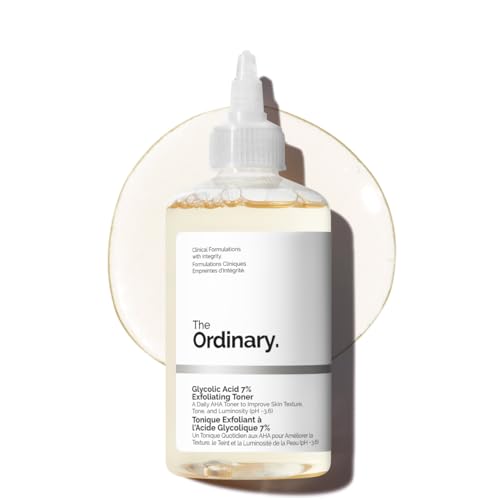
What Is The Ordinary Glycolic Acid 7% Toner?
Glycolic acid is an alpha-hydroxy acid (AHA) that works on the skin’s surface, dissolving the “glue” that holds dead skin cells together. At 7%, this toner sits in a middle ground — strong enough to noticeably improve texture and tone over weeks of use, but formulated to be gentler than the salon-strength peels glycolic acid is best known for.
It’s a liquid, alcohol-free toning solution applied with a cotton pad after cleansing, and it also contains a small amount of aloe vera and ginseng to offset some of the potential dryness from the acid.
Why We Recommend It
Regular exfoliation is one of the most consistently effective ways to prevent clogged pores before they turn into breakouts, and glycolic acid has one of the longest track records of any AHA for improving rough texture, dullness, and shallow post-acne marks. Because glycolic acid has the smallest molecule size of the common AHAs, it penetrates a bit more effectively than lactic or mandelic acid at comparable strengths.
The 7% concentration here strikes a genuinely useful balance — noticeable results without needing the multi-day recovery of a stronger in-office peel, which is exactly why it’s remained one of The Ordinary’s top-selling products for years.
Pros
- Effective exfoliation strength without needing a prescription or in-office visit
- Helps fade shallow post-acne marks and smooth rough texture over time
- Alcohol-free formula is less drying than many older-generation toners
- Extremely affordable relative to salon or dermatologist-office peels
- Can help prevent future clogged pores with consistent use
Cons
- Not suitable for daily use for most people — overuse causes irritation and can damage the skin barrier
- Increases sun sensitivity, so it requires strict daily SPF use
Who Should Buy The Ordinary Glycolic Acid 7% Toner?
Good for anyone dealing with rough texture, dullness, or clogged pores who wants a more affordable alternative to professional chemical peels. It pairs especially well as a once- or twice-weekly step alongside a niacinamide serum.
Skip it, or introduce it very slowly, if you have sensitive, eczema-prone, or already-compromised skin — glycolic acid is one of the more likely actives to cause irritation if overused.
How to Use It
- Start with 2-3 nights per week, never in the same routine as retinol or other exfoliating acids.
- Apply with a cotton pad on clean, dry skin, avoiding the eye area.
- Follow with a moisturizer to offset any dryness.
- Always wear SPF the next morning — exfoliating acids increase sun sensitivity.
Our Verdict
This remains one of the best-value entry points into chemical exfoliation. It won’t replace a professional peel for deeper concerns, but for everyday texture, dullness, and prevention of clogged pores, it’s hard to beat at this price — as long as you respect the “less is more” rule and keep sunscreen non-negotiable.
Frequently Asked Questions
Can I use this every day?
Most people should not. Start at 2-3 times a week and only increase frequency if your skin tolerates it well with no redness, stinging, or peeling.
Can I use this with retinol?
Not in the same routine. Combining two exfoliating/renewing actives increases irritation risk significantly — alternate nights instead (e.g. glycolic on Mon/Wed/Fri, retinol on other nights).
Will this help with acne scars?
It can help fade shallow, flat discoloration (post-inflammatory marks) over consistent use, but it won’t significantly change textured or pitted scarring, which typically needs a stronger in-office treatment.
Related Guides
See the full Best Products for Acne-Prone & Oily Skin guide for how this compares to the other top picks, or browse all our skincare recommendations.